

Artificial graphite is a highly engineered material with a wide range of industrial applications due to its exceptional properties such as high thermal conductivity, electrical conductivity, chemical stability, and lubricity. As a leading supplier of artificial graphite, I am often asked about the manufacturing process of this remarkable material. In this blog post, I will take you through the detailed steps of how artificial graphite is made.
Raw Material Selection
The first crucial step in making artificial graphite is the selection of raw materials. Generally, petroleum coke and coal tar pitch are the primary raw materials used. Petroleum coke is a by - product of the oil refining process, and it has a high carbon content, usually above 90%. Coal tar pitch, on the other hand, is a residue from the distillation of coal tar, which acts as a binder.
The quality and characteristics of these raw materials significantly impact the final properties of the artificial graphite. For instance, the sulfur content in petroleum coke can affect the oxidation resistance of the final product. We carefully source our raw materials from reliable suppliers to ensure consistency and high quality.
Grinding and Mixing
Once the raw materials are selected, they undergo a grinding process. Petroleum coke is ground into fine powder particles. The particle size is an important factor as it affects the density and strength of the final graphite product. Typically, the particle size of the ground petroleum coke ranges from a few micrometers to tens of micrometers.
After grinding, the petroleum coke powder is mixed with coal tar pitch. The mixing process is carried out in a specialized mixer under controlled temperature and pressure conditions. The ratio of petroleum coke to coal tar pitch is carefully determined based on the desired properties of the final product. During mixing, the coal tar pitch coats the petroleum coke particles, forming a homogeneous mixture.
Forming
The next step is forming the mixture into the desired shape. There are several forming methods available, including extrusion, molding, and isostatic pressing.
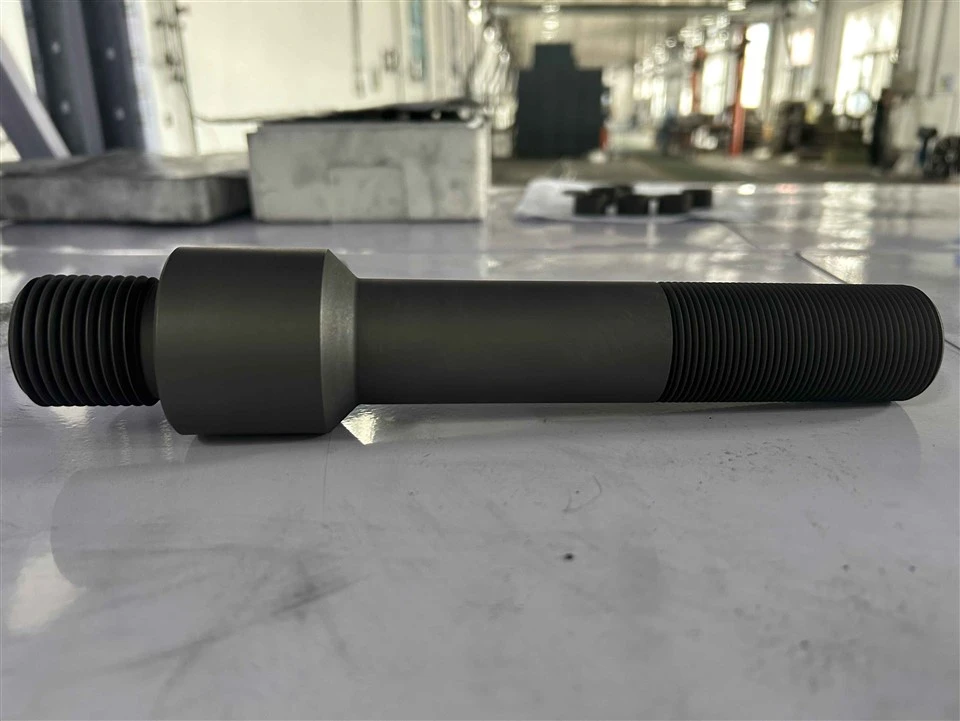
- Extrusion: In extrusion, the mixed material is forced through a die under high pressure to create continuous shapes such as rods, tubes, or profiles. This method is suitable for producing long and uniform products. For example, our Graphite Connecting Rod Product Introduction details products that can be manufactured using extrusion techniques. The extrusion process allows for precise control of the cross - sectional shape and dimensions of the graphite product.
- Molding: Molding involves placing the mixed material into a mold and applying pressure to shape it. This method is commonly used for producing complex shapes such as blocks, plates, or parts with specific geometries. The mold can be made of various materials such as metal or graphite itself. The pressure applied during molding helps to compact the material and remove any air voids.
- Isostatic Pressing: Isostatic pressing is a process where the mixed material is placed in a flexible container and subjected to uniform pressure from all directions. This method is ideal for producing high - density and high - strength graphite products. It can achieve a more uniform density distribution compared to other forming methods, resulting in better mechanical and physical properties.
Baking
After forming, the green (un - graphitized) product is baked in a high - temperature furnace. The baking process is carried out in an inert atmosphere, usually nitrogen or argon, to prevent oxidation. The temperature during baking gradually increases from a few hundred degrees Celsius to around 1000 - 1300°C.
During baking, the coal tar pitch undergoes a carbonization process. It loses volatile components and transforms into a carbonaceous binder that holds the petroleum coke particles together. The baking process also helps to improve the mechanical strength and dimensional stability of the product. The duration of the baking process can range from several hours to several days, depending on the size and complexity of the product.
Impregnation (Optional)
In some cases, the baked product may undergo an impregnation process. Impregnation involves soaking the baked graphite in a liquid resin or other impregnants. This process is used to improve the density, strength, and corrosion resistance of the graphite. For example, phenolic resin is a commonly used impregnating agent.
The impregnation process is carried out under vacuum and pressure conditions to ensure that the impregnating agent penetrates deep into the pores of the graphite. After impregnation, the product is usually baked again to cure the impregnating agent.

Graphitization
The final and most critical step in the production of artificial graphite is graphitization. Graphitization is a high - temperature heat treatment process where the baked or impregnated product is heated to extremely high temperatures, typically between 2500 - 3000°C.
At these high temperatures, the carbon atoms in the material rearrange themselves into a crystalline graphite structure. The long - range order of the carbon atoms is established, resulting in the characteristic hexagonal lattice structure of graphite. This process significantly improves the electrical and thermal conductivity, as well as the lubricity and chemical stability of the material.
Graphitization is carried out in a specialized graphitization furnace, which can be either an Acheson furnace or an induction furnace. The Acheson furnace uses a resistive heating method, while the induction furnace uses electromagnetic induction to generate heat. The choice of furnace depends on factors such as the size of the product, production volume, and energy efficiency.
Machining and Finishing
After graphitization, the graphite product may undergo machining and finishing operations to achieve the final dimensions and surface quality. Machining processes such as turning, milling, drilling, and grinding are used to remove excess material and create precise shapes and tolerances.
Finishing operations may include polishing the surface of the graphite to improve its smoothness and appearance. The final product is then inspected for quality control, including checks for dimensions, density, electrical conductivity, and other physical and chemical properties.
Applications of Artificial Graphite
Artificial graphite has a wide range of applications across various industries. In the electronics industry, it is used in electrodes for batteries, heat sinks, and semiconductor manufacturing. In the metallurgical industry, it is used as crucibles, molds, and electrodes for electric arc furnaces. In the mechanical engineering industry, products like CARBON SLEEVE and Graphite Support Rod made from artificial graphite are used for their excellent lubricity and high - temperature resistance.
Conclusion
The manufacturing process of artificial graphite is a complex and highly technical one that involves multiple steps, from raw material selection to graphitization and finishing. Each step requires careful control and optimization to ensure the production of high - quality artificial graphite products.
As a supplier of artificial graphite, we are committed to providing our customers with the best - quality products. Our in - depth understanding of the manufacturing process allows us to customize products according to the specific requirements of our clients. Whether you need artificial graphite for a small - scale project or a large - scale industrial application, we have the expertise and capabilities to meet your needs.
If you are interested in our artificial graphite products and would like to discuss your procurement requirements, please feel free to contact us. We look forward to the opportunity to work with you and provide you with the best solutions for your business.
References
- Fitzer, E., & Heintz, E. (1995). Carbon - Fibers and Their Composites. Springer - Verlag.
- Marsh, H., & Rodriguez - Reinoso, F. (2006). Activated Carbon. Elsevier.
- Oya, A., & Marsh, H. (1990). Chemistry and Physics of Carbon. Marcel Dekker.