

Hey there! As a supplier of Graphitized Petroleum Coke, I've seen firsthand how this material can have a significant impact on the rheological properties of various substances. In this blog, I'll break down what graphitized petroleum coke is, how it influences rheology, and why it matters in different industries.

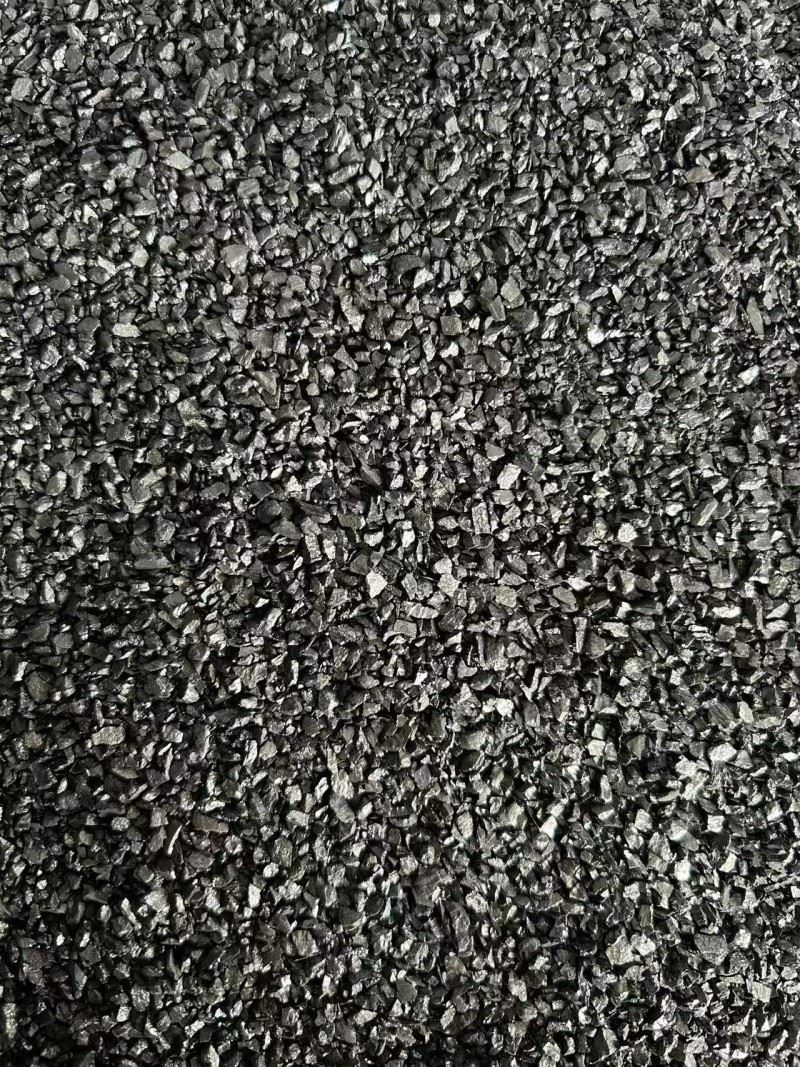
First off, let's get a basic understanding of graphitized petroleum coke. It's a high - carbon product obtained from the graphitization of petroleum coke. Petroleum coke is a by - product of the oil refining process. Through a high - temperature graphitization process, the carbon atoms in the petroleum coke rearrange into a more ordered graphite - like structure. This gives graphitized petroleum coke unique physical and chemical properties.
Now, let's talk about rheology. Rheology is all about how materials flow and deform under the influence of an applied force. It's a crucial aspect in many industries, from plastics and rubber to construction and metallurgy. The rheological properties of a material can determine its processability, performance, and end - use applications.
One of the key ways graphitized petroleum coke affects rheology is through its lubricating properties. Due to its graphite - like structure, it has a low coefficient of friction. When added to a material, it can act as a solid lubricant, reducing the internal friction between the particles of the material. For example, in the plastic industry, when graphitized petroleum coke is incorporated into a polymer matrix, it can improve the melt flow of the plastic. This means that during the injection molding or extrusion process, the plastic can flow more easily through the molds or dies. This not only improves the processing efficiency but also results in a more uniform product with fewer defects.
In the rubber industry, graphitized petroleum coke can also play a vital role in rheological behavior. Rubber compounds need to have the right balance of viscosity and elasticity for proper processing and performance. By adding graphitized petroleum coke, the rubber can have better flow characteristics during mixing and molding. It helps to disperse the other additives more evenly in the rubber matrix, which in turn affects the overall rheological properties of the rubber compound. This can lead to improved mechanical properties such as better tensile strength and elongation at break.
Another important aspect is the effect on the viscosity of materials. Viscosity is a measure of a fluid's resistance to flow. Graphitized petroleum coke can either increase or decrease the viscosity of a material depending on the concentration and the nature of the base material. In some cases, a small amount of graphitized petroleum coke can act as a viscosity modifier. It can disrupt the intermolecular forces in a liquid or semi - liquid material, reducing its viscosity. On the other hand, at higher concentrations, it can form a network structure within the material, increasing its viscosity. This property can be exploited in different applications. For instance, in some high - performance coatings, the right amount of graphitized petroleum coke can be added to adjust the viscosity of the coating formulation. This ensures that the coating can be applied evenly and has good adhesion to the substrate.
In the construction industry, especially in concrete and mortar, graphitized petroleum coke can also influence rheology. When added to concrete, it can improve the workability of the mixture. The lubricating effect of graphitized petroleum coke allows the concrete to flow more easily during placement and compaction. This can result in a more homogeneous concrete structure with better durability. It can also reduce the water demand of the concrete, which is beneficial for strength development.
Now, let's look at some related products. If you're interested in other carbon - based additives, we also offer Artificial Graphite Powder. It has similar but slightly different properties compared to graphitized petroleum coke. Artificial graphite powder can be used in applications where a higher degree of purity and specific graphite characteristics are required.
Graphite Electrodes Powder is another option. It's often used in the production of graphite electrodes, which are crucial in the steelmaking industry. The powder's rheological properties are carefully controlled to ensure the proper manufacturing of high - quality electrodes.
Calcined Anthracite is also a valuable carbon additive. It can be used in combination with graphitized petroleum coke in some applications to achieve specific rheological and performance goals.
In summary, graphitized petroleum coke has a wide - ranging impact on the rheological properties of materials. Its ability to act as a lubricant, modify viscosity, and improve workability makes it a valuable additive in many industries. Whether you're in plastics, rubber, construction, or metallurgy, it can offer solutions to enhance the processing and performance of your products.
If you're looking to source high - quality graphitized petroleum coke or any of the related products mentioned above, I'd love to have a chat with you. We can discuss your specific requirements and how our products can fit into your production processes. Reach out to start a procurement discussion and let's see how we can work together to achieve your goals.
References
- ASTM International standards related to carbon additives and their rheological testing.
- Industry research papers on the application of graphitized petroleum coke in different sectors.
- Technical reports from leading manufacturers of materials using carbon additives.