


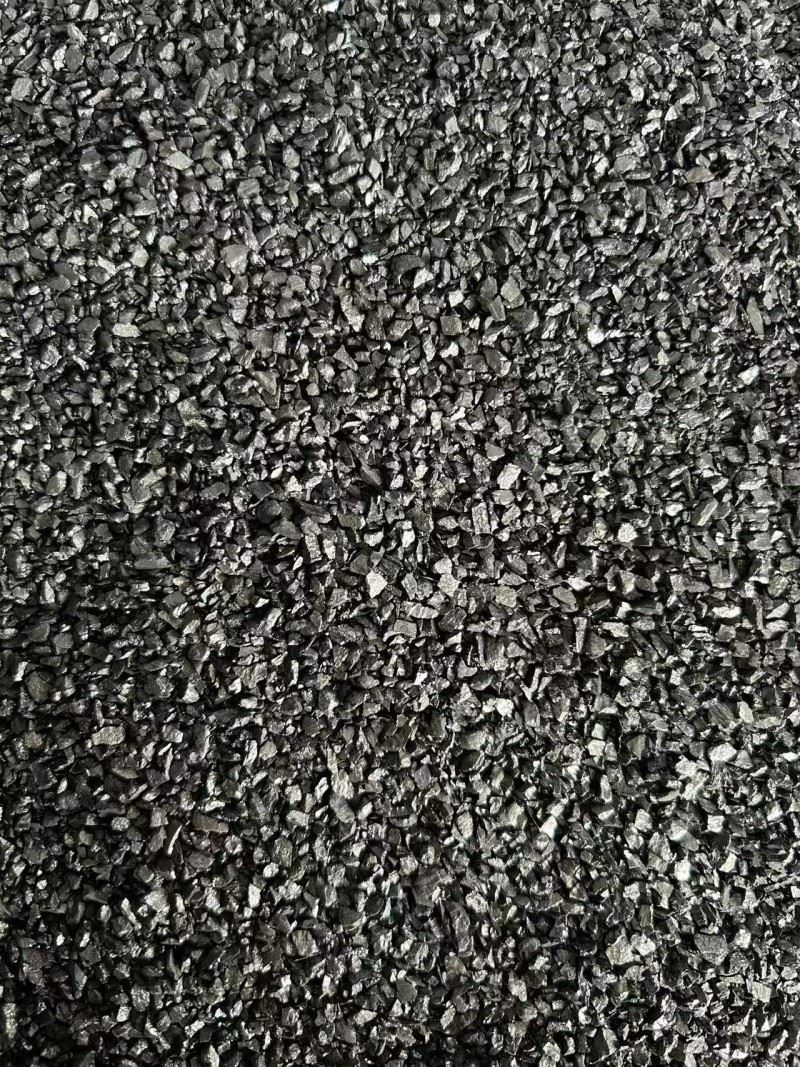
Calcined anthracite is a type of anthracite coal that has undergone high-temperature treatment (typically at 1200°C–1500°C) to enhance its carbon content, fixed carbon purity, electrical conductivity, and chemical stability. It is a crucial raw material in metallurgy, chemical industries, and electrode manufacturing, particularly for applications requiring high carbon performance.
Key Properties
High Fixed Carbon (>90%) – Low volatile matter and ash content, suitable for high-purity carbon applications.
High Electrical Conductivity – Used in conductive applications like electrodes and refractory materials.
Excellent Thermal Stability – Stable structure after calcination, with good thermal shock resistance.
Low Sulfur & Phosphorus – Ideal for high-quality steelmaking.
High Density – Superior mechanical strength, suitable for pressing into blocks (e.g., carbon bricks, electrode paste).
Production Process
- Raw Material Selection – High-grade anthracite (fixed carbon >80%).
- Calcination – Heated in high-temperature kilns (rotary kiln, shaft kiln, or electric calciner) at 1200°C–1500°C to remove volatiles and increase carbon purity.
- Cooling & Screening – After calcination, the material is cooled and graded by particle size (e.g., 0-1mm, 1-5mm, 5-10mm).
Major Applications
(1) Metallurgical Industry
Electrode Paste – Used in aluminum electrolysis cells (as anode material).Steelmaking Carburizer – Increases carbon content in molten steel (alternative to petroleum coke/graphite).
Ferroalloy Production – Acts as a reducing agent in silicon metal, ferrochrome, etc.
(2)Refractory Materials
Magnesia Carbon Bricks – Lining for steelmaking furnaces and electric arc furnaces.
Aluminum Carbon Products – Refractories for continuous casting.
(3) Chemical Industry
Silicon Carbide (SiC) Production – Serves as a carbon source.
Raw Material for Activated Carbon – Further processed to produce high-adsorption activated carbon.
(4) Other Applications
Foundry Industry – Carburizing agent for sand casting.
Conductive Materials – Partially replaces graphite in batteries, brushes, etc.
Comparison: Calcined Anthracite vs. Raw Anthracite vs. Petroleum Coke vs. Synthetic Graphite
|
Property |
Calcined Anthracite |
Raw Anthracite |
Petroleum Coke |
Synthetic Graphite |
|
Fixed Carbon |
90-95% |
80-90% |
85-98% |
99%+ |
|
Ash Content |
3-8% |
5-15% |
0.5-5% |
<0.5% |
|
Conductivity |
High |
Medium |
High |
Very High |
|
Cost |
Moderate |
Low |
Medium-High |
High |
|
Main Uses |
Electrode paste, carburizer |
Fuel, chemicals |
Aluminum electrolysis, graphite production |
Lithium batteries, brushes |
Key Quality Indicators
Fixed Carbon Content (Higher is better, typically >90%).
Ash Content (Lower is better, premium grades <5%).
Volatile Matter (Should be <2% after calcination).
Sulfur & Phosphorus Content (Affects steel quality, preferably <0.5% sulfur).
Particle Size Distribution (Customized for applications, e.g., 0-1mm, 1-5mm).
Market Trends
Growing Demand in Steelmaking – Eco-friendly alternative to petroleum coke as a carburizer.
Stable Demand in Aluminum Electrolysis – Key material for electrode paste.
Trend Toward High Purity – Ultra-high fixed carbon (>95%) products favored in premium markets.
For specific product specifications (e.g., particle size, fixed carbon content) or supplier recommendations, feel free to inquire further!