

Hey there! As a supplier of Graphite Electrodes Powder, I've been diving deep into the nitty - gritty details of how the surface energy of this powder impacts its dispersion in matrices. It's a topic that might not sound super exciting at first, but trust me, it's crucial for anyone working with this material.
Let's start by understanding what surface energy is. In simple terms, surface energy is like the "stickiness" or the tendency of the powder particles to interact with their surroundings. Every material has a certain amount of surface energy, and graphite electrodes powder is no exception. High surface energy means the particles are more likely to clump together because they attract each other strongly. On the other hand, low surface energy makes the particles more "independent" and less likely to form big clusters.
When it comes to dispersion in matrices, this surface energy plays a huge role. A matrix is like the "host" material where the graphite electrodes powder is added. It could be a polymer, a ceramic, or a metal. The goal is to get the powder evenly spread out in this matrix to achieve the best performance of the final product.
If the surface energy of the graphite electrodes powder is too high, the particles will stick to each other, forming aggregates. These aggregates are like big chunks of powder that don't disperse well in the matrix. This uneven dispersion can lead to all sorts of problems. For example, in a composite material, it can cause weak spots because the mechanical properties are not uniformly distributed. In an electrical application, it can disrupt the flow of electricity because the conductive powder is not evenly spread.
Now, let's talk about how we can control the surface energy of the graphite electrodes powder. One way is through surface treatment. We can modify the surface of the powder particles to either increase or decrease their surface energy. For instance, coating the particles with a thin layer of a specific material can change the way they interact with each other and the matrix. This coating can act as a barrier, reducing the attractive forces between the powder particles and allowing for better dispersion.
Another factor that affects the surface energy is the particle size. Smaller particles generally have higher surface energy because they have a larger surface - to - volume ratio. This means that more of the particle is exposed on the surface, leading to stronger interactions. So, when choosing the graphite electrodes powder for a particular application, we need to consider the right particle size to balance the surface energy and dispersion requirements.
Let's also take a look at the type of matrix. Different matrices have different surface energies themselves. If the surface energy of the matrix is very different from that of the graphite electrodes powder, it can be difficult to achieve good dispersion. We need to match the surface energies as closely as possible. For example, if the matrix has a low surface energy, we might want to use a graphite electrodes powder with a relatively low surface energy too.
Now, I'd like to mention some of the related products that we offer. We have Graphitized Petroleum Coke, which is a great alternative or complementary material to graphite electrodes powder. It has its own unique properties and can be used in various applications where carbon materials are needed.
Another product is Calcined Anthracite. It's a high - quality carbon additive that can also be used in combination with graphite electrodes powder in some cases. And of course, we have Artificial Graphite Powder, which has different characteristics compared to natural graphite and can be tailored to specific needs.
In terms of applications, the dispersion of graphite electrodes powder in matrices is crucial in many industries. In the automotive industry, it can be used in brake pads. The even dispersion of the powder helps in improving the friction and wear properties of the brake pads. In the aerospace industry, it can be used in composite materials for aircraft parts. Good dispersion ensures that the materials have the right strength - to - weight ratio and other important properties.
In the energy storage sector, such as in batteries, the dispersion of graphite electrodes powder in the electrode material is essential. It affects the battery's performance, including its capacity, charging speed, and cycle life. If the powder is not well - dispersed, the battery may not work as efficiently, and its lifespan may be shortened.
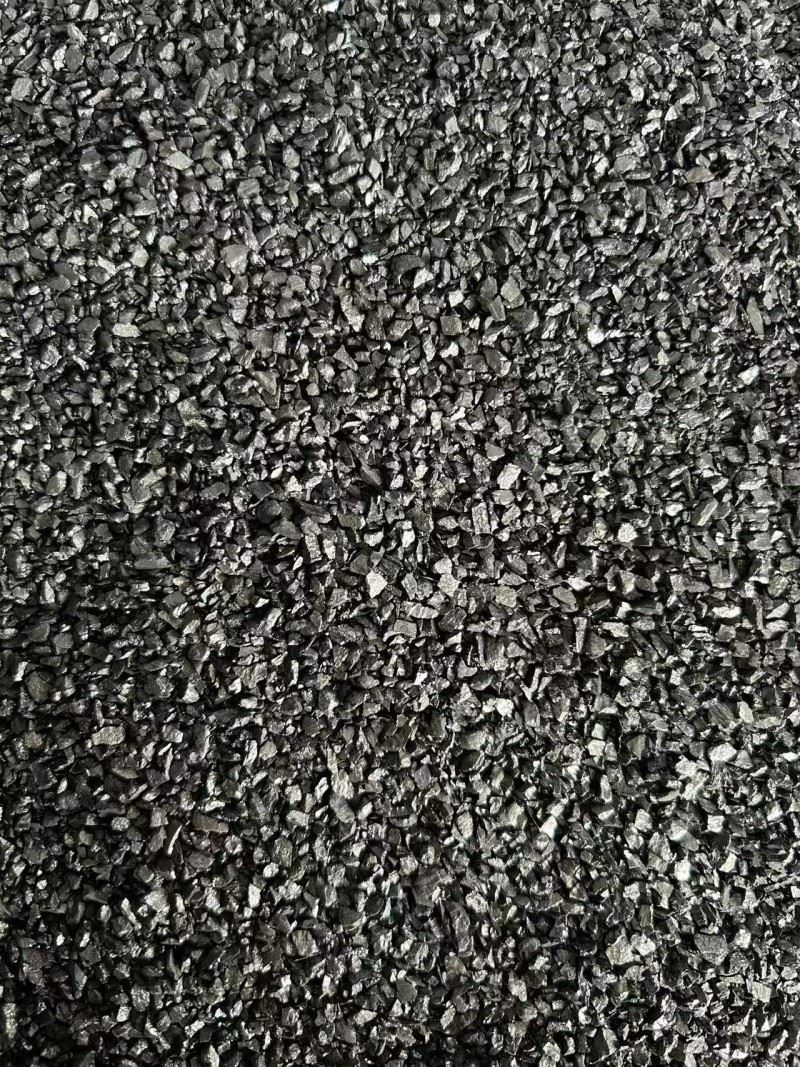

So, if you're in the market for high - quality graphite electrodes powder or any of our related products, and you're concerned about the dispersion in matrices, we're here to help. We have a team of experts who can provide you with the best advice on choosing the right product and ensuring proper dispersion. Whether you're a small - scale manufacturer or a large - scale industrial player, we can work with you to meet your specific needs.
Don't hesitate to reach out if you have any questions or if you're interested in starting a procurement negotiation. We're looking forward to working with you to create the best solutions using our graphite electrodes powder and related products.
References:
- Smith, J. (2018). "Surface Chemistry of Carbon Materials." Journal of Materials Science.
- Johnson, A. (2020). "Dispersion of Nanoparticles in Composite Materials." Composite Science and Technology.
- Brown, C. (2019). "Carbon Additives in Industrial Applications." Industrial Materials Review.